With the acceleration of the construction of smart cities, smart parks, and smart mines, low-speed unmanned vehicles, as the fastest carrier for the implementation of L4-level autonomous driving, have seen a continuous expansion of their product categories and have formed large-scale fleets of various types. The industry standard T/SSITS 2006-2024 clearly states that low-speed unmanned vehicles specifically refer to electrically-driven unmanned vehicles with a speed of 30 km/h or less, operating in closed or semi-closed scenarios. The mainstream categories are divided into four core types:
1. Low-speed unmanned cleaning vehicles: small sweeping vehicles, medium-duty sweeping and cleaning vehicles, and disinfection and cleaning unmanned vehicles, used for cleaning in parks, municipal walkways, and factory road surfaces, where there is long-term exposure to rain and dust accumulation;
2. Unmanned logistics delivery vehicles: community delivery vehicles, factory material transfer vehicles, and supermarket retail unmanned vehicles, with frequent round trips and multi-vehicle cluster operations;
3. Security inspection unmanned vehicles: park security vehicles, photovoltaic power station vehicles, oil and gas plant vehicles, and factory patrol vehicles, operating 24/7 in outdoor environments;
4. Park connection sightseeing vehicles: small passenger shuttle vehicles for scenic spots, industrial parks, and airports, operating at high intensity during peak hours;
In addition, port low-speed transfer vehicles, photovoltaic cleaning unmanned vehicles, and low-speed livestock inspection vehicles also belong to the low-speed unmanned vehicle niche market.
According to the 2026 low-speed unmanned driving industry research, the total number of various low-speed unmanned vehicles in China exceeds 120,000 units, but over 80% of the fleets still use traditional metal plug contact charging. The charging process has become the core bottleneck restricting 7×24-hour unmanned operation. WIRELESSPT relies on a 180W-6000W full-power industrial wireless charging matrix, matching the voltage and power requirements of all types of low-speed unmanned vehicles. Relying on the official waterproof and explosion-proof specification books for standardized hardware, it solves the common outdoor charging pain points of multiple vehicle models in one step, and has been implemented in over 300 parks, cleaning, and industrial and mining customers.
1. Common charging pain points for all-category low-speed unmanned vehicles
1. Rapid interface wear-out in outdoor conditions
Unmanned vehicles for cleaning, inspection, and delivery are often parked outdoors for long periods. Rain, sand, dust, and corrosive fog continuously erode the metal plugs, causing oxidation and short circuits within 3 to 6 months; during rainy seasons, water accumulation in the interfaces极易 leads to leakage, presenting significant safety hazards. The annual expenditure on plug spare parts for each vehicle fleet exceeds 10,000 yuan.
2. Strict parking accuracy requirements, causing breaks in unmanned operation
Traditional charging requires precise alignment within ±3mm. The low chassis of low-speed vehicles, uneven ground, and debris on the road can easily cause positioning deviations. Autonomous parking often fails to complete charging, necessitating manual intervention to reset, completely disrupting the closed-loop unmanned operation.
3. Unable to achieve fragmented charging, resulting in low equipment utilization
Contact charging requires centralized visits to charging rooms for long-term static charging. Unmanned vehicles with depleted batteries during the journey can only stop and return, reducing the effective daily operation time of each vehicle by over 30%.
4. Poor compatibility for multiple vehicle models in the same area
When multiple low-speed unmanned vehicles such as cleaning, delivery, and inspection are deployed simultaneously in the park, the battery specifications (24V/48V/72V) are not uniform. Traditional charging stations cannot be universally used, and multiple sets of charging equipment need to be set up, resulting in large site occupation and cumbersome maintenance.
II. WIRELESSPT Power Adaptation Solution for All Categories of Low-Speed Unmanned Vehicles
Based on the vehicle tonnage, battery capacity, and operation intensity, WIRELESSPT divides standardized power modules:
1. 180W - 1200W (Miniature Low-Speed Vehicles)
Suitable for small cleaning vehicles, photovoltaic inspection vehicles, and park security patrol cars. Output 4-20A, vertical charging distance 0-50mm, X-axis maximum deviation ±20mm, IP67 protection, thin body, can be embedded in the vehicle chassis, suitable for distributed point charging of lightweight small low-speed unmanned vehicles.
2. 3000W Medium-Size Main Model
Suitable for community delivery vehicles, medium-sized sweeping vehicles, and scenic area shuttle vehicles. Rated 50A output, full-load transmission efficiency ≥ 87, Z-axis 0-80mm wide adaptability distance, X-axis allowable 50mm parking error, slight ground vibration and positioning deviation do not affect charging; supports CAN/485 dual communication, connects to fleet dispatch system.
3. 4500W - 6000W High-Power Model
Suitable for large factory transfer low-speed vehicles, port low-speed transportation vehicles, and heavy-duty cleaning and sweeping vehicles. 72V high-voltage high-current fast charging, suitable for large-capacity batteries, can replenish range in a short time gap, meet all-day high-intensity continuous operation.
The entire series of transmitters and receivers have a unified IP67 fully sealed aluminum alloy casing, working temperature range covers -40℃ to +60℃, stable operation in outdoor exposure, frost, rain; explosion-proof series is equipped with Ex mb II C T6 double explosion-proof certification, low-speed vehicles for inspection in oil and chemical parks can be used in compliance. The equipment supports proximity charging and dual mode of dispatch command startup, unmanned vehicles arriving at cache points, loading and unloading points, and park stations automatically perform in-air charging without the need for separate planning of charging sites. Hardware provides two installation methods: surface and embedded, compatible with 24V/48V/72V full specifications lithium batteries and lead-acid batteries.
III. Ground Test Data, Covering Four Low-Speed Unmanned Vehicle Scenarios
1. Municipal Smart Sanitation Project
In a certain new district, dozens of WIRELESSPT3000W wireless charging devices were deployed, matching two types of low-speed sanitation vehicles: sweeping and watering.
2. Industrial Park Delivery Scenario
Multiple unmanned logistics delivery vehicles in a large manufacturing park were equipped with WIRELESSPT1200W charging modules. During the waiting period for deliveries, the vehicles automatically replenish energy.
3. Photovoltaic Park Inspection Low-Speed Vehicle
16 inspection unmanned vehicles for a 50MW photovoltaic power station were equipped with anti-corrosion wireless charging. They are resistant to sand, salt fog, and have no risk of electric sparks. The inspection coverage area was increased by 27%, and no dedicated personnel were required to drive to the charging station for charging.
The WIRELESSPT wireless charging system is equipped with 2.4G radio frequency communication. The charging voltage, current, temperature, and fault codes are synchronized in real time to the fleet management backend. Overcurrent, overvoltage, and high-temperature multi-level automatic protection is provided, and remote fault warnings are available without the need for on-site manual troubleshooting. The equipment has an average fault-free operation time of 50,000 hours. The entire machine enjoys a one-year warranty nationwide for 400 after-sales services and provides one-stop services including on-site survey and customized installation.
IV. Industry Development Trends and WIRELESSPT's Layout
At present, smart cities and digital transformation of industrial parks are accelerating across various regions. The deployment of multiple models of low-speed unmanned vehicles has become the norm. Unified, maintenance-free, and fully automatic wireless charging has become a basic requirement for infrastructure. WIRELESSPT, with its complete product line covering 180W to 6000W, can provide a one-stop solution for all low-speed unmanned vehicle categories including cleaning, delivery, inspection, and connection, addressing three core challenges: compatibility of charging for multiple vehicle models in mixed scenarios, durability in outdoor harsh environments, and full autonomous charging for unmanned vehicles.
Unlike single-power charging products on the market, WIRELESSPT has optimized a large-offset fault-tolerant design for low-speed unmanned vehicle chassis, ground unevenness, and mixed vehicle models scenarios. It does not require the installation of high-precision positioning modules, significantly reducing the overall vehicle modification cost. The annual production of 20,000 automated production lines can be delivered in batches.
In the future, WIRELESSPT will continue to improve the full-scenario energy solution for low-speed unmanned vehicles, helping parks, municipal services, and industrial and mining sectors achieve truly 7×24-hour zero-human operation for various low-speed unmanned vehicles, and promoting the commercialization and large-scale implementation of low-speed unmanned driving.


 EN
EN


 +86 18678901310







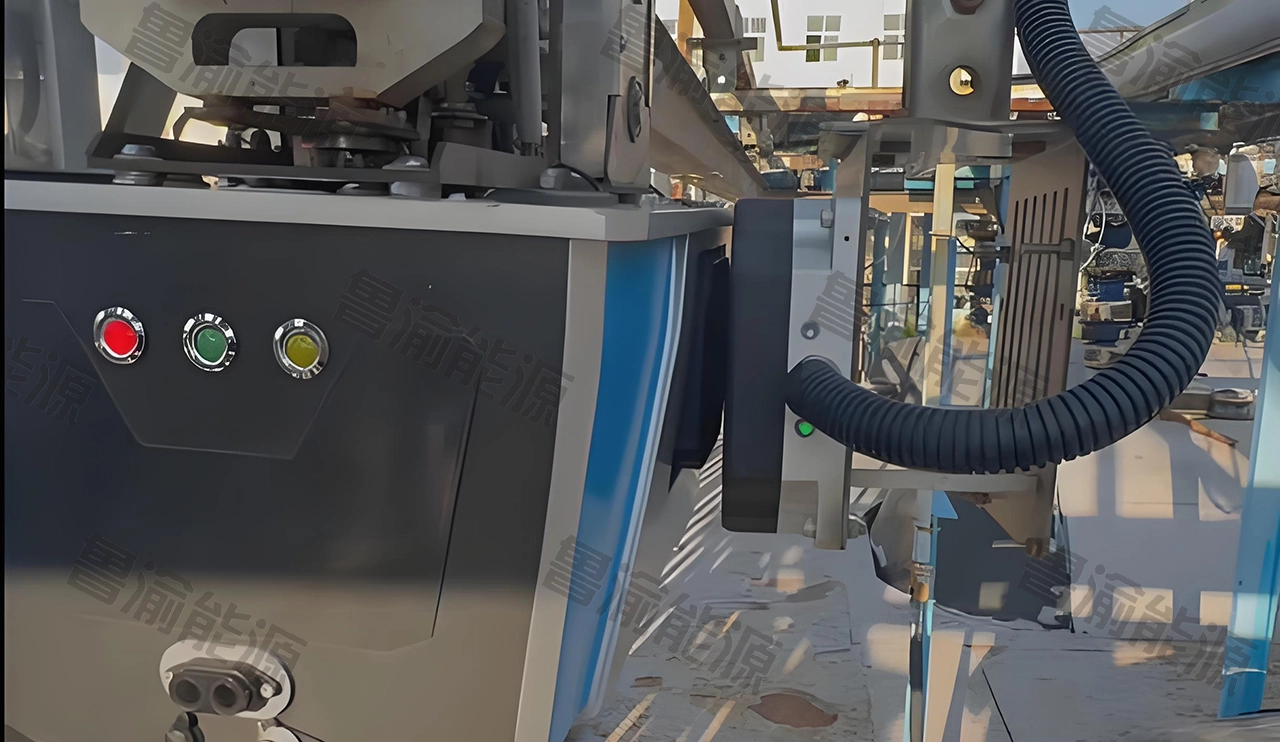
 Explosion-proof Wireless Charging