Unmanned delivery vehicles are entering city streets at an unprecedented speed.
The "2025-2026 Unmanned Delivery Vehicle Industry Commercialization Research Report" recently released by the Smart Logistics Branch of the China Logistics and Purchasing Federation shows that by the end of 2025, the number of unmanned delivery vehicles deployed nationwide exceeded 33,000. By the first quarter of 2026, this figure had risen to 47,000. The report predicts that the total number of new deployments in 2026 will reach 68,000; by 2030, the industry's annual production and sales volume is expected to reach 860,000 units, with a cumulative ownership exceeding 2 million units. Analysys International's prediction is even more optimistic - the total sales volume in 2026 will reach 89,000 units, and the total ownership in 2030 will exceed 3.5 million units.
The market is booming, but an overlooked issue is becoming a "roadblock" for large-scale implementation - charging.
1. Dispatching, routes, and orders are all "unattended", but charging is still "dependent on humans".
The core value of unmanned delivery vehicles lies in "unattended operation". The vehicle's dispatching, route planning, order matching, etc. have already achieved a digital closed-loop within the industry. However, the charging process, which seems to be a basic action, has always been a pain point in the entire process that has not yet been closed-looped.
The charging methods of traditional unmanned delivery vehicles either rely on manual cable insertion and removal or on contact-type charging stations. In actual operations, both of these methods have exposed serious problems.
Difficult to achieve precise docking. Contact-type charging requires millimeter-level docking accuracy for the delivery vehicle, but after long-term operation outdoors, factors such as tire wear and GPS signal drift cause unavoidable docking position deviations. Some industry insiders have stated that it is difficult for unmanned vehicles to find suitable areas for batch parking and charging in urban centers.
Interfaces are prone to damage and maintenance costs are high. Outdoor rain, dust, and salt fog cause the exposed charging interfaces to rapidly oxidize and corrode. Manual charging, dispatching operation, inspection and maintenance, etc. have high labor costs and are difficult to scale.
Safety hazards. The large current insertion and removal generate electric sparks, and in dry and dusty environments, there is a risk of fire. In the past, the charging of unmanned vehicles relied on manual follow-up insertion and removal of charging, which not only increased labor costs but also brought safety risks.
These problems have been transforming from "minor troubles" to "major bottlenecks" as the number of unmanned delivery vehicles increases from "thousands" to "millions".
II. The Industry Takes Action: Autonomous Charging Has Become an Essential Option for Unmanned Delivery
The leading enterprises in the industry have recognized the urgency of this issue.
In May 2026, Sinotruk and its partner companies launched the world's first unmanned vehicle automatic charging and operation center - "Charging Island" in Qingdao. This center integrates automatic parking, automatic charging, automatic car washing, and intelligent vehicle repair, completely eliminating the industry pain point of "no one is driving, and charging relies on humans" for unmanned vehicles.
The intelligent unmanned delivery vehicles used by the express delivery outlets of SF Express also have the function of automatic wireless charging.
Industry trends indicate that autonomous charging is shifting from an "optional feature" to a "standard configuration" for unmanned delivery vehicles. As a media comment put it, the competition for unmanned vehicles has divided into two fronts: who can complete orders faster and who is cheaper on the road; who has a more extensive charging network and who is more aggressive in implementation behind the scenes.
Under this trend, wireless charging technology, due to its characteristics of no physical contact and no need for manual intervention, is becoming the mainstream option for charging solutions for unmanned delivery vehicles.
III. WIRELESSPT: Utilizing industrial-grade wireless charging technology to complete the "last link" for unmanned delivery vehicles
WIRELESSPT is a company specializing in the research, development, production, and sales of high-power, industrial-grade wireless charging products. The company's founder is a doctoral graduate from Tsinghua University, and the core R&D team comes from renowned universities such as Tsinghua University and Harbin Institute of Technology.
In response to the charging challenges in low-speed unmanned driving scenarios such as unmanned delivery vehicles, WIRELESSPT has launched a wireless charging solution covering a full power range from 180W to 6000W.
Core advantages:
1. High degree of freedom in charging, no need for precise alignment. WIRELESSPT is based on magnetic coupling resonance technology, and the product allows a ±5cm horizontal and ±1cm vertical offset. Unmanned delivery vehicles do not need to be equipped with a high-precision positioning system or repeatedly calibrate the docking position. "Almost" docking and charging can be done, and actual project data shows that the docking success rate can reach 100%.
2. High-power fast charging, supporting fragmented charging. WIRELESSPT is the first in the industry to introduce wireless fast charging technology, with a charging current of over 200 amperes. The system has a maximum efficiency of over 90%, and the charging speed has partially surpassed traditional industrial wired charging. Unmanned delivery vehicles can automatically recharge during short stop intervals without needing to wait for a long time for a stop.
3. Fully sealed protection, adaptable to harsh outdoor environments. WIRELESSPT products have passed IP67 protection level certification, completely dust-proof, and can be briefly immersed in water. The working temperature range covers -40℃ to 60℃. Whether in the northern winter's severe cold, the southern summer's intense sunlight, or rainy, snowy, or dusty weather, it can operate stably.
4. Zero sparks, inherently safe. The entire charging process is completely physically isolated, with no exposed metal contacts, and no sparks during high-current charging. This is an important safety guarantee in the dry and dusty environment that unmanned delivery vehicles may encounter.
IV. Company Strength: Ten years of accumulation, over 100 patents, annual production capacity of 20,000 sets
WIRELESSPT holds over 100 patents in the field of wireless charging, including 45 authorized invention patents. The company has a 2,000-square-meter automated assembly and testing workshop in Yantai, Shandong Province, with an annual production capacity of 20,000 sets. It has passed ISO9001 and ISO14001 system certifications.
In the field of low-speed unmanned driving, WIRELESSPT has formed a complete capability from scheme design to batch delivery. The products and technologies have been widely applied in 50+ specialized fields such as petroleum, chemical industry, power, logistics, and warehousing, serving over 300 customers.
When unmanned delivery vehicles move from "10,000 units" to "1 million units", and when industry competition extends from "receiving orders on the road" to "charging behind the scenes", wireless charging is evolving from adding value to becoming an essential infrastructure for ensuring the success of large-scale operations. WIRELESSPT's industrial-grade wireless charging solution might just be the answer to this final "unmanned" aspect.


 EN
EN


 +86 18678901310







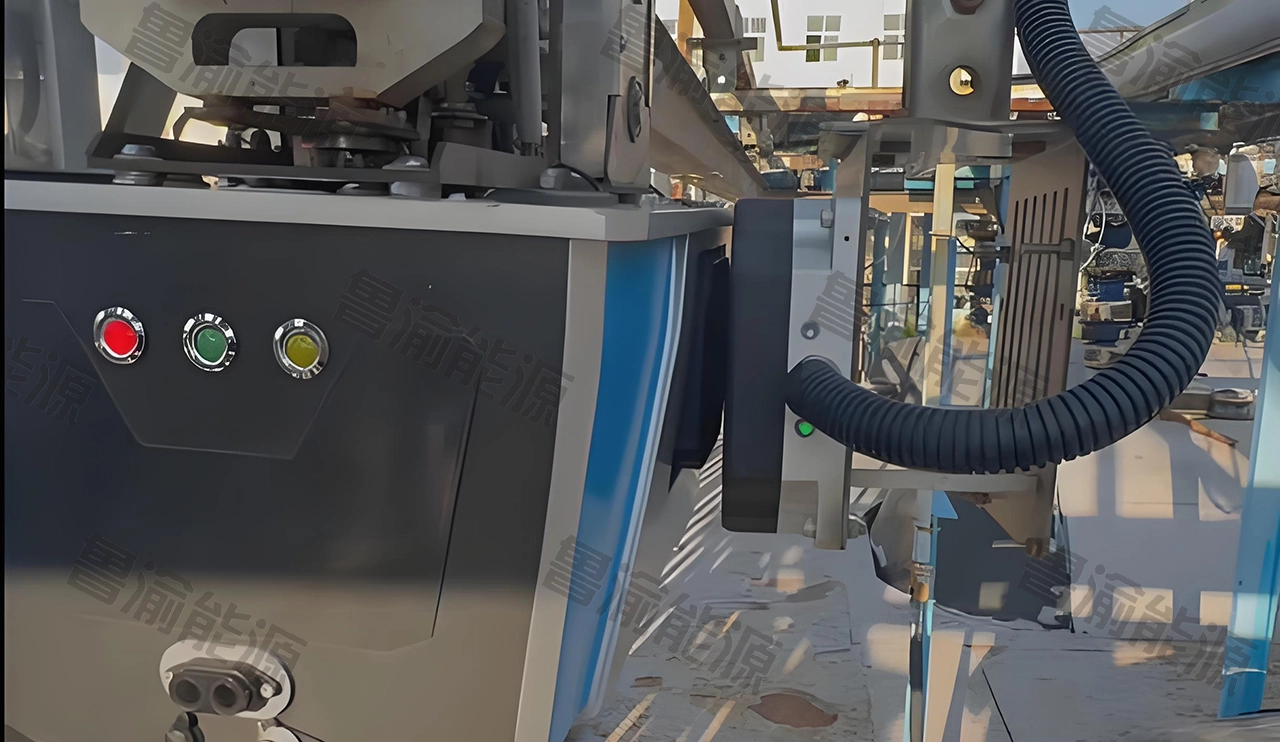
 Explosion-proof Wireless Charging