In industrial production, the distribution room is regarded as the "heart" of the production process - the safety and reliability of the distribution equipment directly determine the operation status of the enterprise's production equipment and the completion of production tasks. With the advancement of intelligent manufacturing, more and more enterprises are beginning to introduce unmanned intelligent inspection robots to replace the traditional manual inspection methods. However, these tireless "safety sentinels" often face a common predicament: interruption of energy supply.
1. The pain points of traditional on-site charging for inspection:
Traditionally, the inspection robots in distribution rooms mostly adopt the "manual charging upon returning to base" or "battery replacement" mode. This mode implies that the inspection tasks must be suspended, which not only significantly reduces the working efficiency and online rate of the equipment, but also, in scenarios requiring 24-hour continuous monitoring, may potentially introduce safety hazards due to the data collection gaps.
Specifically, the traditional charging method has three major problems.
The first is low efficiency. After completing the inspection tasks, the robots need to return to a fixed charging station to plug and unplug the battery, and during the charging process, they cannot operate. The equipment utilization rate is greatly reduced. For distribution rooms that require 24-hour monitoring, each charging stop may mean the emergence of a monitoring blind zone.
The second is safety risks. Frequent charging plugs and unplugs or battery replacements can easily cause interface wear and spark risks. In distribution rooms with high-voltage equipment density, exposed electrical contacts themselves are a huge safety threat. Some viewpoints suggest that this problem is particularly prominent in harsh industrial environments such as dust and moisture.
The third is high maintenance costs. Contact-type charging interfaces are prone to wear and oxidation during frequent plugging and unplugging, and regular replacement is required. Although the distribution room environment is relatively clean, dust accumulation and humidity changes over the long term still affect the charging reliability and increase the maintenance burden.
These pain points have led to a gap in the "unmanned" closed-loop of the inspection robots in distribution rooms - the charging环节 still requires manual intervention or faces frequent failures.
2. Wireless Charging: Enable the inspection robot to "stop and charge immediately, and leave when fully charged"
In response to the aforementioned issues, WIRELESSPT has launched an industrial-grade wireless charging solution specifically designed for power inspection robots. This solution covers a wide power range from 180W to 6000W to accommodate the needs of different models. The product adopts magnetic resonance coupling technology, enabling efficient transmission over a distance of 10 centimeters.
When the inspection robot completes its task or its battery level drops below the threshold, it will autonomously navigate to the wireless charging station deployed along the inspection route. Without any physical contact, electrical energy can be efficiently and safely transmitted to the robot's built-in receiving end through magnetic resonance coupling technology. The entire process is fully automated, truly achieving "stop and charge immediately, and leave when fully charged".
In the specific scenario of a distribution room, WIRELESSPT's solution has several key advantages:
Firstly, the charging distance and offset tolerance. The magnetic resonance technology allows a charging distance of 0 to 10 centimeters. The robot does not need to precisely "aim at" the charging station; it only needs to enter the charging area to effectively charge. This significantly reduces the strict requirements for the robot's parking accuracy, especially suitable for the limited space and complex robot paths in the distribution room.
Secondly, the fully sealed high protection design. Both the charging end and the receiving end adopt IP67 or higher protection levels, with no exposed conductors, completely eliminating the risks of short circuits and corrosion caused by dust and moisture. Although the distribution room is not exposed to the elements like outdoor areas, dust accumulation and humidity changes during long-term operation can still affect the reliability of the equipment. The fully sealed design fundamentally eliminates this隐患.
Thirdly, zero spark intrinsic safety. The entire charging process is completely physically isolated, with no exposed metal contacts. There are no sparks or arcs, and it is inherently safe to charge near high-voltage equipment, eliminating the risk of electric shock from manual insertion and removal. This characteristic is particularly important for distribution rooms with extremely high safety requirements.
In addition, the system charging efficiency can reach over 90%. The product is equipped with an in-built foreign object detection, alignment deviation tolerance, and intelligent temperature control system to ensure a safe, efficient charging process with minimal energy loss. The product has undergone rigorous industrial environment testing, capable of withstanding high and low temperatures and resisting vibration and shock, ensuring stable operation in various complex industrial scenarios.
3. The Closed Loop from " manned operation" to " unmanned operation"
The value of wireless charging technology in power distribution room inspections is not only in "saving a wire", but also in truly connecting the "unmanned operation" final link.
Under the traditional "manual inspection - manual charging" mode, the automation level of power distribution room inspections has always had a ceiling. However, the combination of wireless charging with automatic navigation and automatic charging systems can achieve fully unmanned operation throughout the process, further enhancing the intelligence and automation levels. When the robot's task is completed or its battery level is low, it can autonomously navigate to the charging area and complete the charging process, truly realizing 7×24-hour unmanned inspection.
The industrial inspection robot wireless charging solution of WIRELESSPT has helped over 300 customers in fields such as power inspection, mine safety, and petrochemicals to build a truly unmanned intervention, continuous and efficient intelligent operation and maintenance system. After introducing the WIRELESSPT 600W wireless charging system in a certain project, the transmitter was embedded at the end stop point of the track, and after the robot completed its task, it automatically entered the charging area and charged upon docking, eliminating the problem of dragging the cable.
4. Company's Technical Strength Verification
In terms of technological accumulation, WIRELESSPT holds over 100 patents in the field of wireless charging, including 45 authorized invention patents. The products have passed ISO9001 and ISO14001 system certifications, and the waterproof series achieves IP67 protection level, while the explosion-proof series has obtained Ex mb IIC T6 Gb gas and dust dual certifications. A 2,000-square-meter automated assembly and testing workshop has been established in Yantai, Shandong Province, with an annual production capacity of 20,000 sets.
In the specific field of wireless charging for distribution room inspection robots, WIRELESSPT has formed a complete capability from technological research and development, product design to batch delivery, and can meet different requirements ranging from lightweight track inspection robots to heavy-duty wheeled inspection robots.


 EN
EN


 +86 18678901310







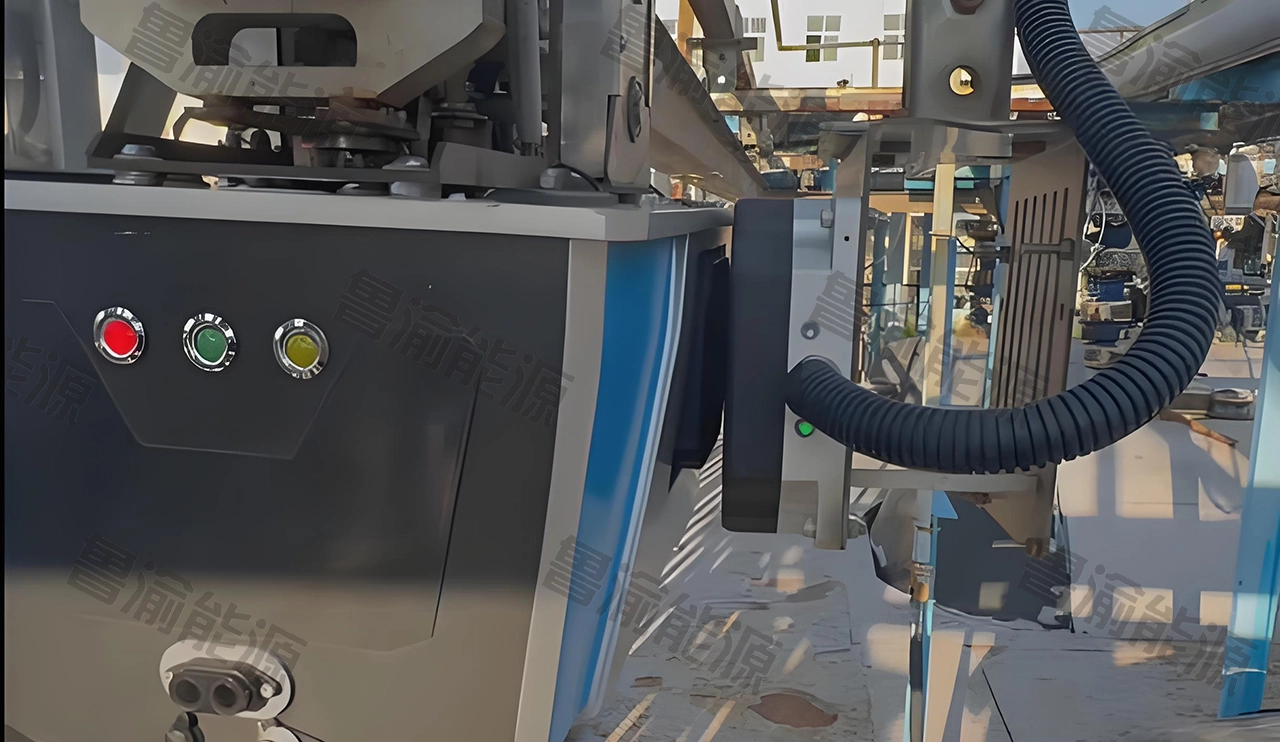
 Explosion-proof Wireless Charging