In the long stretches of oil pipelines, the deep and dark coal mine tunnels, and the high-temperature and high-pressure chemical plant areas, a kind of "unwearable" intelligent equipment is quietly taking over the dangerous, repetitive and boring inspection tasks that were previously performed by humans - this is the inspection robot. They either glide along the tracks or walk autonomously with their wheels, and are hailed as the "mobile sentinels" of industrial facilities.
However, these sentinels face a common predicament: when the battery runs out, who will "stand guard" for them? Traditional manual battery replacement or contact charging not only diminishes the value of unmanned inspection but also poses safety hazards in special scenarios such as explosion prevention and moisture resistance. WIRELESSPT, as an industrial-grade wireless charging technology provider, has launched a full-power wireless charging solution ranging from 180W to 6000W. This solution provides "instant charging upon arrival and seamless power supply" for wheeled inspection robots and suspended (hanging) inspection robots, allowing industrial sentinels to truly maintain their posts 24/7.
I. The "Charging Pain" of Inspection Robots
The unique working environment of inspection robots necessitates that their charging methods must overcome three major challenges:
1. Harsh environment, rapid contact failure. Industrial chemical plant areas are exposed to corrosive gases; power tunnels are dark and prone to water accumulation. The traditional contact-type charging metal contacts rapidly oxidize and accumulate dirt in such environments, becoming non-contactable within a few weeks, leading to charging failure or even short circuits.
2. Difficult precise docking, large docking deviation. The traveling rail robot operates on tracks, and the docking position is affected by factors such as track flatness, wheel slipping, and load changes, making it impossible to achieve millimeter-level alignment each time; wheeled robots also have docking deviations on outdoor or uneven ground. Traditional charging requires precise alignment, and even a slight deviation makes charging impossible or efficiency sharply decreases.
3. High explosion-proof and safety requirements. In environments such as oil, chemical, and coal mines where there are flammable and explosive gases or dust, charging sparks are a fatal hazard. Ordinary charging equipment cannot be deployed, and explosion-proof charging is often bulky and costly.
II. Full-power Matrix, Precise Adaptation
WIRELESSPT offers a wireless charging solution for inspection robots. Whether the robot is conducting light-load inspections or heavy-load monitoring, is operating indoors in an explosion-proof environment or outdoors in a waterproof condition, it can find a product that precisely matches its requirements.
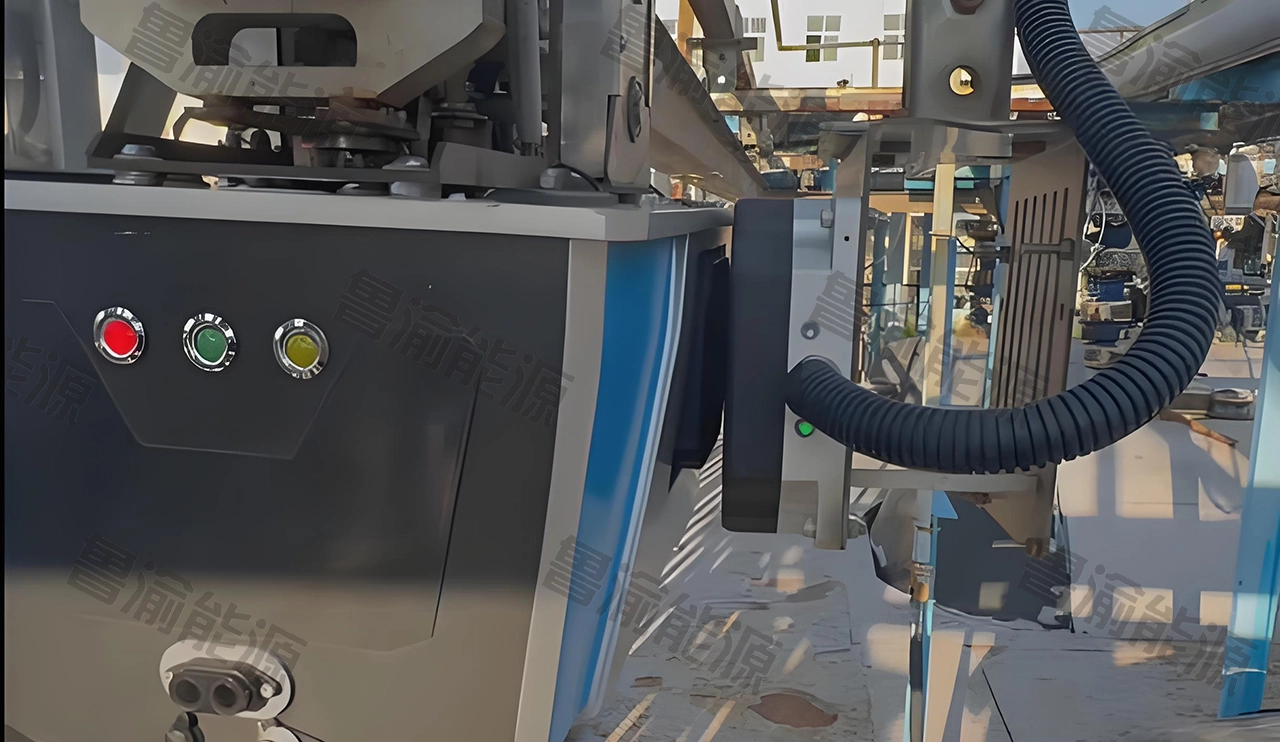
Wheel-type inspection robots usually navigate autonomously and have relatively flexible docking positions, with high tolerance for deviations from charging equipment; the hanging rail inspection robots operate along fixed tracks, and the docking points can be preset, but there are restrictions on the installation space (below or on the side of the track), and the receivers need to be thin and easy to integrate. WIRELESSPT adopts an integrated design, and the thickness of the transmitter and receiver for control can be easily embedded in the track support or the side of the robot.
III. Core Technology: Making Inspection Charging "Uninhibited"
1. PTSmart™ Technology, with an extremely large tolerance for offset. Based on the principle of parity-time symmetry, the WIRELESSPT wireless charging system operates within an X-axis ±50mm, Y-axis ±10mm, and vertical distance 0-100mm range. Wheeled robots do not require high-precision reverse parking, and the suspended rail robots can still charge efficiently even if the parking position deviates due to track expansion, wheel wear, etc.
2. IP67 Full Sealing Protection, Adaptation to Extreme Environments. The protection level of all series products is IP65/IP67, completely dust-proof and short-term water-immersed-proof. The working temperature ranges from -40℃ to 60℃, suitable for various outdoor scenarios from extremely cold northern regions to hot southern regions. The explosion-proof series has passed Ex mb II C T6 Gb / Ex mb IIIC T0℃ Db certification, zero-spark charging, and can operate safely in gas and dust dual-explosion-proof areas.
3. Intelligent Management, Deep Integration with Inspection System. Supports CAN/RS485 communication, can upload charging status, battery health, and fault codes in real time to the inspection management platform. When the robot returns to the charging station, the system automatically records charging data, providing battery life prediction and fault warning for maintenance personnel.
IV. Typical Application Scenarios
Scenario One: Underground Coal Mine Track Inspection Robot
A large coal mine deployed a track-mounted inspection robot in the coal conveying corridor to monitor the operation status of the belt conveyor. The original power supply was via cable, which led to frequent cable wear and high failure rate. The WIRELESSPT600W wireless charging system was introduced, with the transmitter embedded at the docking point at the end of the track. After completing the task, the robot automatically entered the charging area and charged upon docking. Cable failures were eliminated, and the number of maintenance personnel per shift was reduced by 2. The robot availability rate reached 99.5%.
Scenario Two: Wheeled Explosion-proof Inspection Robot in Chemical Plant Area
In the tank area of a chemical enterprise, a wheeled explosion-proof inspection robot was used to detect gas leaks. Due to the presence of flammable gases in the environment, traditional charging was not feasible. WIRELESSPT provided a 1200W explosion-proof wireless charging solution (Ex mb certification), with the charging dock deployed at the edge of the safety zone. The robot received short-term charging multiple times a day. Zero-spark charging passed the safety review, and the robot did not require manual intervention. The frequency of tank area inspection was increased by 3 times.
V. WIRELESSPT: The Deep Partner of Wireless Charging for Inspection Robots
Since its establishment in 2014, WIRELESSPT has been dedicated to the research and development as well as industrialization of industrial-grade wireless charging technology. It is a national high-tech enterprise. The company has a 2,000-square-meter automated assembly and testing workshop in Yantai, with the capacity to deliver 20,000 sets of wireless charging products on a large scale annually. To date, WIRELESSPT has obtained over 100 patents in the field of wireless charging technology (including 45 invention patents), and is a comprehensive manufacturer of wireless charging products in China. It has served over 100 well-known enterprises such as China Shipbuilding, Weichai, and Southern Power Grid.
"The value of inspection robots lies in their continuous 'presence'." WIRELESSPT, "If charging requires manual intervention, it returns to the original point of 'replacing humans with machines'. WIRELESSPT's wireless charging solution aims to make the energy replenishment of inspection robots as natural and imperceptible as breathing."
VI. Ensuring Industrial Sentinels Never Lose Their Jobs
Whether it's the rail-mounted robotic vehicle that slides along the tracks, or the wheeled robots that roam freely within the factory premises, the WIRELESSPT180W to 6000W full-power wireless charging solution, with its robust features of high offset tolerance, full-sealed protection, and intelligent management, has built an unbreakable energy defense line for industrial inspections. Choosing WIRELESSPT is choosing to enable inspection robots to truly achieve "uninterrupted vigilance day and night".


 EN
EN


 +86 18678901310






 Explosion-proof Wireless Charging