In the evolution of Industry 5.0 and intelligent manufacturing, industrial robots have become the core productive force of modern factories. From the welding robots in the automotive assembly workshop, to the assembly mechanical arms on the 3C electronics production lines, and to the palletizing robots for heavy-load handling - they tirelessly perform precise operations around the clock. However, a long-neglected bottleneck is currently restricting the full-time operational efficiency of robots: the "last mile" of charging. WIRELESSPT has launched a 180W to 6000W full-power wireless charging system, featuring integrated design, high offset tolerance, and intelligent charging management, to create a truly "invisible charging" solution for various industrial robots.
I. The "Three Major Pain Points" of Industrial Robot Charging
Industrial robots come in various types, but the challenges faced in the charging process are highly similar:
Pain Point 1: Relying on human intervention and downtime losses. Many industrial robots still use the traditional mode of "low battery - manual insertion and replacement of batteries". Each robot needs to stop for charging 1-2 times a day, each time taking more than half an hour. This not only weakens the return on investment in automation but also makes the ideal of "continuous production 24/7" difficult to achieve.
Pain Point 2: Safety hazards from dust and sparks. In welding workshops, foundries, and chemical production lines, metal dust, oil stains, and flammable volatile substances are everywhere. Traditional contact-type charging relies on physical docking of exposed electrodes, and the contacts are prone to oxidation and accumulation of dust, resulting in poor contact or even sparking. This not only reduces the charging success rate but also poses safety hazards in scenarios with flammable materials.
Pain Point 3: Continuous accumulation of maintenance costs. The lifespan of mechanical contacts is usually only tens of thousands of insertions and extractions. On 24-hour production lines, the contact components need to be replaced every 3-6 months. Spare parts procurement, manual replacement, and production line shutdown - these ongoing "hidden costs" often exceed the initial estimates of enterprises.
II. Full Power Coverage: A Complete Solution from Light Load Inspection to Heavy Load Handling
Industrial robots vary greatly in size, power, and application scenarios. A small service robot may only require charging of a few hundred watts, while a heavy-load handling robot may need rapid recharging of several kilowatts. The WIRELESSPT product offers power coverage of 180W, 300W, 450W, 600W, 1200W, 1500W, 3000W, 4500W, and 6000W, and can be expanded to 12kW and 20kW, meeting the needs of all scenarios from light-load assembly robots to heavy-load AGVs, unmanned forklifts, and large industrial robotic arms.
Regardless of the power level, WIRELESSPT adopts an integrated design - integrating the power converter and the coupling coil into the same housing, achieving integration of electricity, magnetism, heat and signal. Compared with the traditional discrete solution, the volume is reduced by approximately 60%, the installation time is significantly shortened, and the reliability is significantly improved.
III. PTSmart™ Technology: Docking Deviation No Longer Becomes an Efficiency Killer
When industrial robots (especially mobile robots) dock at the charging position, it is difficult for them to achieve a completely consistent position each time. Traditional wireless charging has strict requirements for alignment accuracy, and even a slight deviation can lead to a significant drop in efficiency or even inability to charge. WIRELESSPT is based on the principle of parity-time symmetry, PTSmart™ wireless charging technology, which can maintain the system output power and efficiency basically unchanged within the entire working range of the robot (X, Y, and Z axis offsets).
Taking a typical product as an example, within the horizontal offset range of ±50mm in the X-axis and ±10mm in the Y-axis, the vertical working distance covers the range of 20-100mm, and the charging efficiency remains above 87% (some models reach 93%). This means that welding robots, assembly robots, or handling robots do not need to rely on high-precision vision or lasers for docking alignment - the original navigation accuracy can meet the charging requirements, significantly reducing the difficulty and cost of system integration.
IV. Integrated Design: Energy Module Tailored for Industrial Robots
The core advantages of the WIRELESSPT integrated wireless charging system are reflected in four aspects:
1. Compact in size, suitable for various robot structures. The flat packaging makes the receiver thin and can be applied to the body of an AGV for transportation, without occupying additional space.
2. Ready for installation, ready to use. The transmitter and receiver are both single modules. They can be fixed on-site and connected to the power supply to operate, without the need for complex cable connections and on-site debugging, significantly shortening the deployment cycle.
3. High protection level, adaptable to harsh environments. The entire series of products have a protection level of IP65/IP67, completely dust-proof, resistant to low-pressure water jets, and suitable for industrial environments such as welding smoke, casting dust, oil stains, and humidity.
4. Intelligent charging management, extending battery life. An internal constant current - constant voltage charging curve is provided, automatically adapting to different types of batteries such as lithium batteries and lead-acid batteries, without the need for an external charging circuit.
V. Typical Application Scenarios
Scenario One: Assembly Robot on Production Line - High-speed Non-stop Operation
On the precision assembly lines of 3C electronics and automotive components, robots need to frequently change fixtures and tighten screws at the end of the arm. Under the traditional charging method, low-battery robots must leave the production line for charging, disrupting the production rhythm. The WIRELESSPT wireless charging system can be deployed distributively at each docking point on the assembly line. The robots can automatically recharge during the fragmented time such as changing tools or waiting for signals, effectively increasing the operational time by approximately 20%.
Scenario Two: Heavy-duty Palletizing Robot - High-Power Rapid Recharging
In logistics sorting centers and finished product warehouses of manufacturing industries, heavy-duty palletizing robots continuously transport heavy goods, and battery consumption is fast, with urgent charging needs. The WIRELESSPT 3000W/6000W high-power wireless charging solution utilizes the short stops such as changing pallets or waiting for materials for the robot to quickly replenish energy with a current of 50A/100A or above, ensuring uninterrupted high-intensity operations.
Scenario Three: Composite Robot/Mobile Mechanical Arm - Cable-Free Flexible Operation
In flexible manufacturing units, composite robots (AGV + mechanical arm) need to move between different workstations to perform transportation and assembly tasks. Traditional charging requires the robot to return to a dedicated charging station, causing empty travel losses. The WIRELESSPT wireless charging system can be deployed at key nodes along the natural path of the robot to set charging points, achieving "charging on the way". The robot can carry different functional fixtures and freely move around the workshop without worrying about cable entanglement and power supply interruptions.
VI. WIRELESSPT: The Pioneering Company in Industrial Robot Wireless Charging
The core team of WIRELESSPT comes from renowned universities such as Tsinghua University, Harbin Institute of Technology, and Ocean University of China. The company's founder, Dr. Li Dan, is one of the earliest experts in industrializing radio energy transmission technology in China and has been awarded the titles of "Innovation and Entrepreneurship Leading Talent of Qingdao" and "Taishan Industry Leader of Shandong Province".
"Wireless charging equipment is divided into the transmitting end and the receiving end. The receiving end is installed on mobile devices such as robots and industrial vehicles. Regardless of the application scenario, safety is the top priority." Currently, WIRELESSPT has launched three major series of products: waterproof wireless charging, explosion-proof wireless charging, and AGV wireless charging. It has obtained more than 100 patents in the field of wireless charging technology and is the manufacturer with the most complete wireless charging product portfolio in China. The company has a 2,000-square-meter automated assembly and testing workshop and has an annual production capacity of 20,000 sets of robot wireless charging products. It has served over 100 well-known enterprises such as China Shipbuilding, Weichai, and Southern Power Grid.
VII. Ensure the power supply of industrial robots to be as reliable as the production line
The WIRELESSPT 180W - 6000W full-power wireless charging system, with its integrated design, small size, high offset tolerance, IP65/IP67 protection, and intelligent maintenance-free core capabilities, endows various industrial robots with the ability to "stop and charge immediately, continue operation". Whether it's a light-load inspection robot, an assembly arm on the production line, a heavy-load palletizing robot, or a compound mobile robot, WIRELESSPT can provide precisely matched wireless charging solutions.


 EN
EN


 +86 18678901310







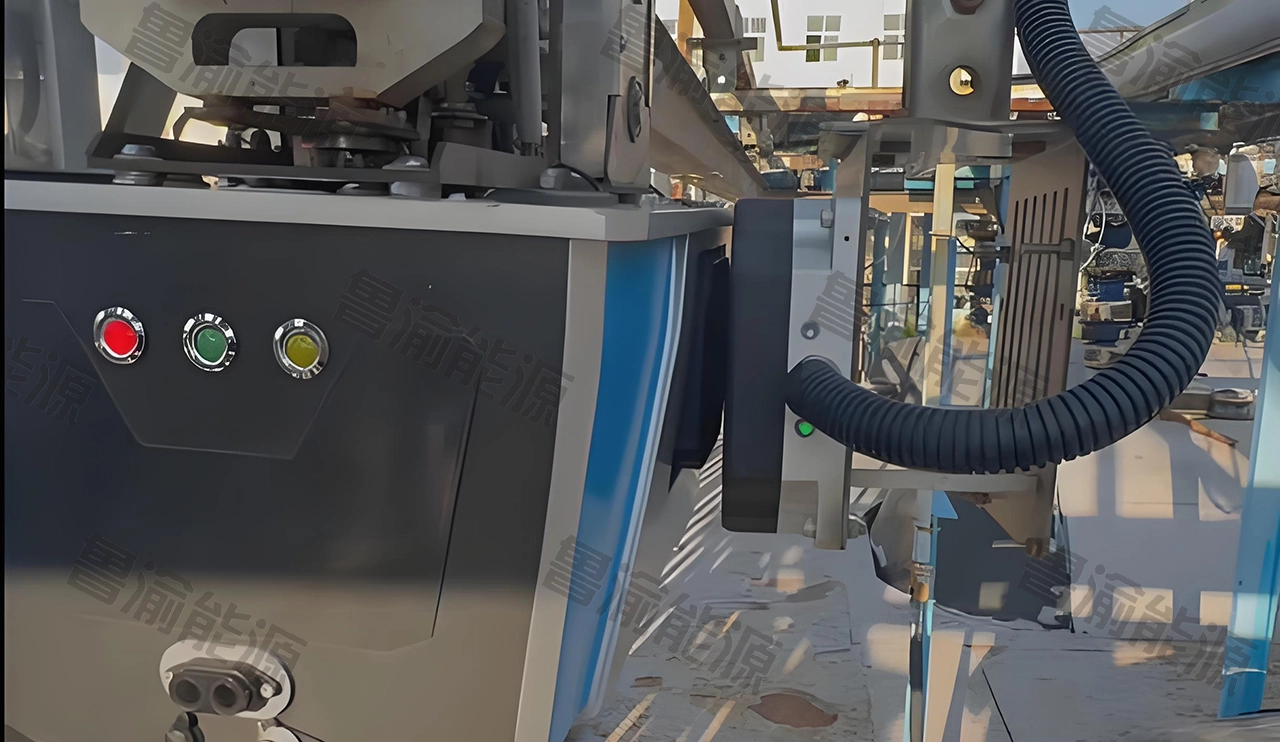
 Explosion-proof Wireless Charging