In scenarios such as modern warehouses, chemical plants, and clean workshops, the widespread use of AGV/AMR/RGV has significantly enhanced operational efficiency. However, an often overlooked risk point is quietly escalating as the level of automation increases - the safety hazard in the charging process. Traditional contact-based charging relies on exposed electrodes for physical connection, and during insertion and removal or when the contact points age, it is highly prone to generating tiny electric sparks. For storage environments containing flammable packaging materials, chemicals, dust, or even lithium batteries, a single spark could lead to a disaster. The WIRELESSPT high-power wireless charging system eliminates the risk of electric sparks at the source using magnetic resonance non-contact technology, building a solid safety barrier for the AGV fleet.
I. The "Three Main Sources" of Charging Sparks
1. Arcs during plug-in and plug-out. When the contact-type charging connector is connected or disconnected, due to the sudden change in current, visible or invisible arcs often occur. In dry, dusty, or environments with flammable volatile substances, this is the most direct ignition source.
2. Arcs caused by deteriorated contacts. As the number of uses increases, the surface of the electrodes oxidizes, accumulates dust, and wears out, resulting in an increase in contact resistance. When a large current passes through an improperly connected point, local heating may even occur and sparks may be generated, often happening during equipment operation and difficult to be detected in time.
3. Spontaneous sparks caused by foreign object short circuits. Metal fragments, tools, or conductive dust accidentally landing on the exposed charging electrodes may cause a short circuit and generate a strong arc, igniting the surrounding materials.
II. Wireless Charging: Eliminating Risks Based on Physical Principles
The WIRELESSPT1500W/3000W/4500W/6000W high-power wireless charging system is based on the principle of magnetic resonance coupling. There is no electrical connection between the transmitting end and the receiving end. During the charging process, energy is transmitted through high-frequency alternating magnetic fields. There are no exposed conductors, no physical contact, and no plugging or unplugging actions. This means:
- No arc generation condition: There is no sudden connection or disconnection of current, so there is naturally no arc.
- No contact aging problem: There are no electrodes that require frictional contact, so failure modes such as wear, oxidation, and dust accumulation no longer exist.
- No short-circuit risk: Both the transmitting end and the receiving end have sealed and insulated structures. Even if a metal foreign object falls on the surface, it will not cause an electrical short circuit.
This fundamentally eliminates the possibility of generating charging sparks, which is the most essential safety advantage of wireless charging compared to traditional contact-based charging.
III. Robust Design for Adapting to Harsh Environments
The storage and industrial site environments are complex and diverse: dust, oil stains, moisture, corrosive gases... Traditional charging interfaces have a sharply increased failure rate in these environments, and the safety risks also increase accordingly. The WIRELESSPT wireless charging system has been specially designed for harsh conditions:
- IP65/IP67 protection level: Completely prevents dust from entering and can withstand low-pressure water jets from any direction. Even in situations where the ground is being rinsed or in high humidity environments, the equipment remains safe and reliable.
- Wide temperature operating capability: 1500W/4500W/6000W products support -40℃~60℃, 3000W products support -20℃~50℃, adapting to extreme temperature differences ranging from cold storage warehouses to high-temperature workshops.
- Over-temperature/over-current/over-voltage multiple protections: Built-in intelligent monitoring system, which detects the equipment temperature, input and output voltage and current in real time. Once the safety threshold is exceeded (such as temperature ≥ 75℃), the system automatically reduces power or shuts down to prevent secondary accidents.
IV. From "Passive Protection" to "Active Safety"
The traditional contact-based charging safety strategy mainly involves "isolation" - delineating the charging area as a hazardous zone, equipping fire-fighting equipment, and requiring operators to undergo training before taking up their positions. However, these measures cannot eliminate the risk sources; they merely reduce the accident probability to an acceptable level.
Wireless charging, on the other hand, achieves active safety: it completely eliminates the conditions for spark generation in the energy transmission method, making the charging process itself no longer requiring "isolation" and "alertness". This enables AGVs to charge freely in any area, without the need to specially designate high-risk charging zones or provide special safety training for operators.
WIRELESS: "In scenarios such as chemical plants, lithium battery warehouses, and paper mills, safety is the top priority. The primary reason our customers choose wireless charging is not efficiency or convenience, but that it eliminates charging from being included in the safety risk assessment report."
V. Application Value in Typical High-Risk Scenarios
- Lithium Battery Raw Material Warehouse: There may be graphite dust suspended in the air, and the risk of spark generation during contact charging is extremely high. Wireless charging solutions have been adopted by many leading lithium battery enterprises.
- Chemical Stereoscopic Warehouse: There are corrosive gases and flammable volatile substances. Traditional charging contacts are prone to rapid corrosion, resulting in frequent failures and safety hazards. The fully sealed design of wireless charging is perfectly suitable.
- Food/Pharmaceutical Cleanrooms: It is not allowed for exposed electrodes to cause particle shedding. Wireless charging is non-contact and without wear, meeting GMP cleanroom requirements.
VI. Make Safety the Default Configuration
For AGV operators, charging safety should not be a "special matter" that requires additional effort to manage. Instead, it should be a built-in "default configuration" of the equipment. The WIRELESSPT high-power wireless charging system, with its core strengths of no sparks, high-level protection, and intelligent monitoring, ensures that the energy replenishment for the AGV fleet is truly free of risks and worries.


 EN
EN


 +86 18678901310







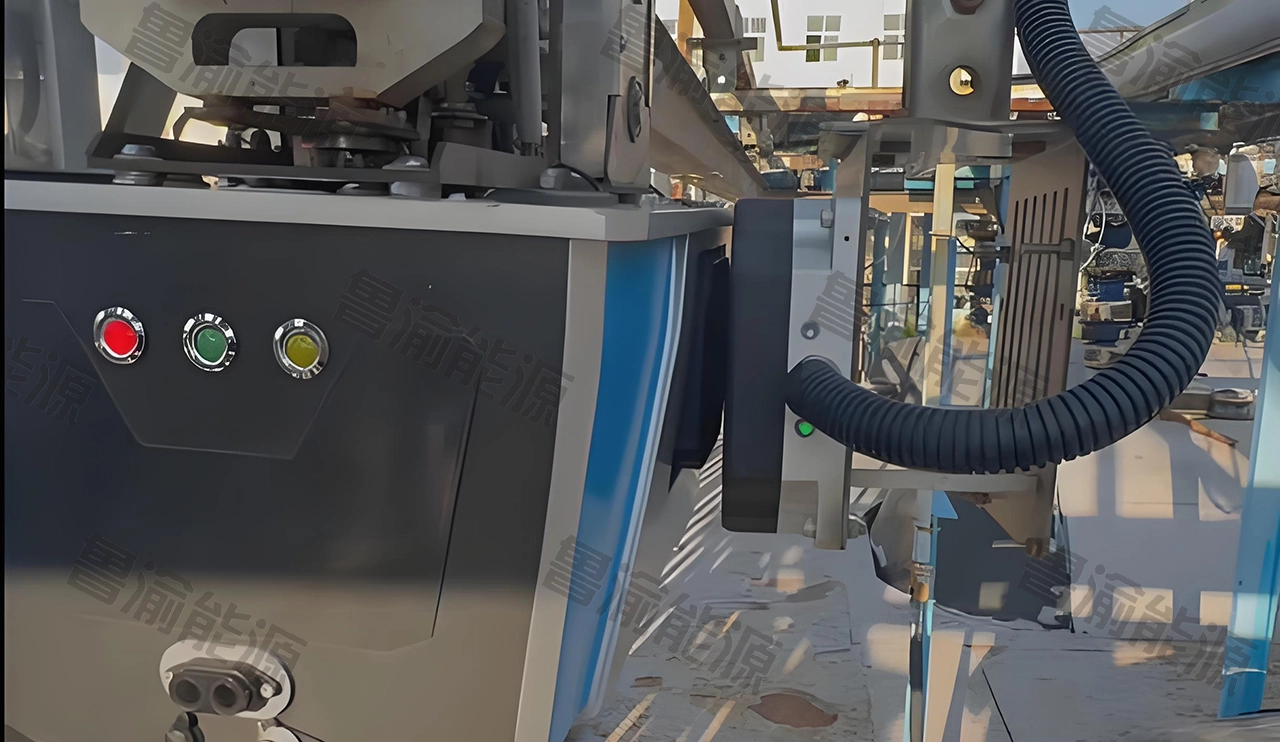
 Explosion-proof Wireless Charging