Not the workers, but an unmanned forklift that should have been constantly moving. It quietly stopped in front of the charging station, its mechanical arm struggling to align with the charging contact points, with flashing indicators waiting. Not far away, two or three forklifts were queuing up - this is not traffic congestion, but "charging congestion". The rhythm of the entire warehouse system was forced to slow down at this moment. The figure of the charging worker bending over to check if the contact is good, the worn-out sockets on the wall due to frequent plugging and unplugging, and the shocking "Overall Equipment Effectiveness (OEE)" figure on the report, together depict the real predicament faced by unmanned forklifts under traditional charging methods: not unwilling to work, but "unable to feed".
This is by no means an isolated case. In today's era of rapid logistics automation, unmanned forklifts have become the core pillar of the intelligent warehouse. However, their power supply method still remains stuck in the last century - relying on manual or mechanical arm for physical docking contact charging. This brings four fatal flaws: first, efficiency breakpoints, dedicated charging and queuing waiting causing a large amount of ineffective time; second, maintenance nightmare, metal contacts oxidizing, sparking, and wearing, with a high failure rate; third, safety concerns, electric sparks lurking in flammable and explosive environments; fourth, flexibility shackles, the charging stations are fixed and difficult to adjust dynamically according to business layout.
As the industry moves towards the "permanent warehouse" era of 7x24-hour uninterrupted operation, this mode of "having to stop for charging" has become the last physical chain hindering further improvement of logistics efficiency. Unlocking it requires not improvement, but a complete energy supply revolution.
Entering the modern logistics center equipped with wireless charging systems, the scene is completely different. The unmanned forklifts' team acts like tireless worker bees, flowing continuously between shelves and loading/unloading ports. Their "energy law" has been rewritten: no longer needing to go to a fixed "restaurant" for a long time "dining", but being able to "add food" at any time at the flowing "energy supply station".
On the way to the next pickup point, the forklift will naturally drive past a charging area embedded in the ground. No need to stop, no need to precisely align, in the passing moment, energy has been silently and silently injected into the battery through the magnetic resonance field. During the moments of waiting for loading and at the necessary turns on the route, these invisible energy stations are ingeniously woven into the workflow by the intelligent scheduling system. Operations and charging are no longer two choices that need to be weighed, but a smooth and seamless action. The pulse of the warehouse finally breaks out of the intermittent rhythm, becoming stable and powerful.
The benefits brought by this wireless transformation are all-round:
• In terms of efficiency, it directly eliminates the "charging" task category. The effective working time of the forklift has soared from less than 75% to over 95%, equivalent to obtaining more than 20% of transportation capacity gain without increasing the number of vehicles. The dispatching system is also relieved, no longer needing to design complex backup and queuing logic for "battery panic".
• From an economic perspective, it significantly reduces the total cost of ownership (TCO). The most direct is a cliff-like drop in maintenance costs - without physical contact, there is no wear and corrosion. Battery life is extended due to the "shallow charging and shallow discharging" that can be done at any time. Infrastructure costs have become extremely simple and flexible, and charging points can be easily deployed and adjusted like "wireless internet hotspots".
• From the safety and reliability perspective, it achieves a fundamental improvement. The fully enclosed, no exposed electrodes design completely eliminates the risk of electric sparks, enabling it to safely enter special environments such as cold storage and food workshops with strict safety and cleanliness requirements. The system has extremely high stability, with a charging success rate approaching 100%.
The technical support behind this transformation is precisely the high-power, high-freedom industrial wireless charging solution provided by WIRELESSPT. The core lies in that, through deeply optimized magnetic resonance technology, an energy transmission efficiency of over 90% (comparable to wired systems) is achieved, while also endowing forklifts with a ±10cm lateral tolerance during charging. This means that unmanned forklifts do not need to park with the precision of a surgical operation. The natural positioning deviations brought about in busy operations are completely within the system's tolerance range.
The 1500W to 3000W wireless charging system tailored for the unmanned forklift scenario by WIRELESSPT has become the "standard energy base" for numerous benchmark projects. This system is like an invisible "energy router", with the receiving end integrated at the bottom of the forklift and the transmitting end embedded in the ground or low platforms. When the forklift enters the energy field, the system automatically identifies and initiates safe high-current charging, supporting a maximum charging current of 200A, yet achieving a full process without arcs or overheating.
Its value has been verified in practical applications. In the regional distribution center of a global e-commerce giant, after introducing this wireless charging system, the unmanned forklift fleet achieved true "workers resting but vehicles not", with a 30% increase in peak handling capacity, and the related charging equipment maintenance costs were eliminated. In the low-temperature warehouse of a large dairy enterprise in China, traditional charging contacts frequently failed due to condensation water, and after replacing with WIRELESSPT's IP67 high-protective wireless system, it has been operating stably in a -25℃ environment for over 18 months, ensuring the continuous operation of the cold chain.
More profoundly, the wireless charging system is inherently a data node. Each charging process generates data, providing feedback on battery health status and energy consumption information, providing precise basis for predictive maintenance and global energy efficiency optimization. This makes the management of unmanned forklift fleets transparent and intelligent to an unprecedented degree.
In the future, one of the criteria for measuring whether a warehouse is sufficiently "smart" might be: does its unmanned forklift still have to worry about finding and docking with charging points? When the acquisition of energy becomes as free and effortless as breathing air, productivity can truly soar. The wireless era of unmanned forklifts is not the future, but the present that is happening and within reach.


 EN
EN


 +86 18678901310







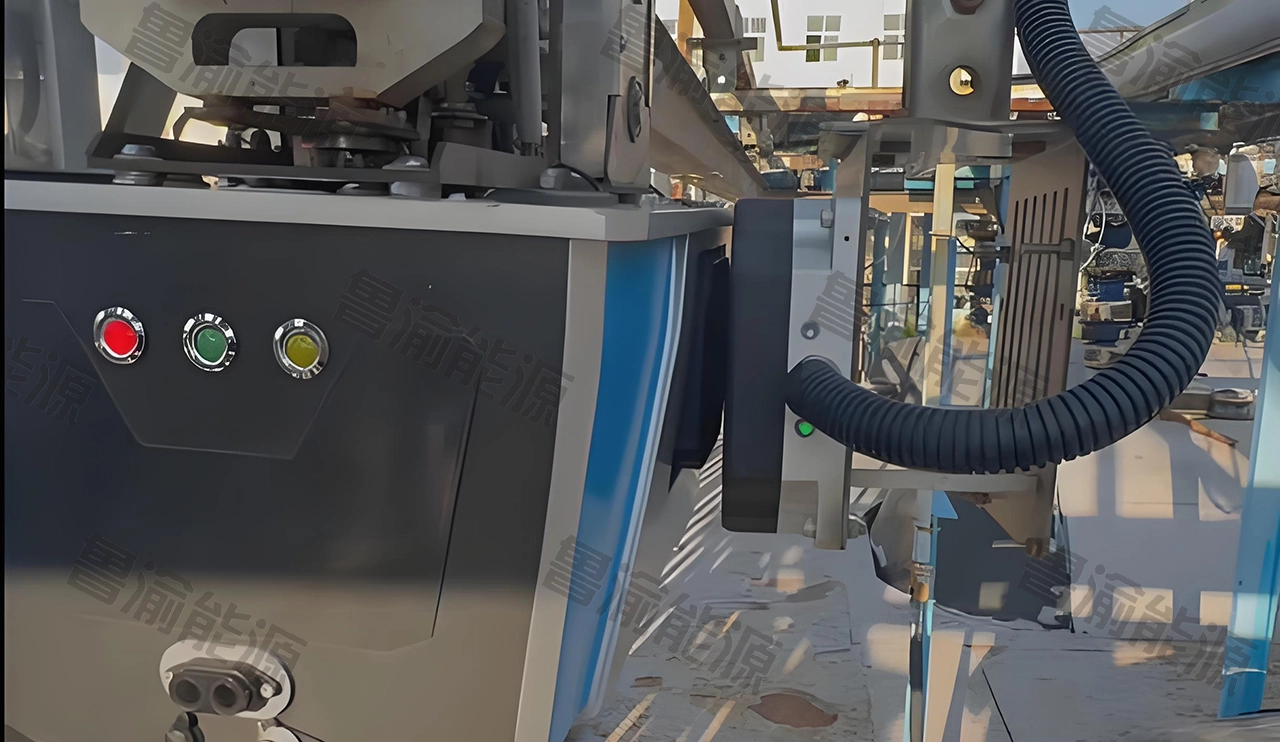
 Explosion-proof Wireless Charging